
How to Locate and Read Your Water Meter
Every home and business connected to the City of Hastings water system has a water meter that measures the amount of water used. Your water meter reading is used to calculate your utility bill. Learning how to locate and read your meter can help you monitor water use, identify leaks, and better understand your quarterly bill.
Where Is My Water Meter?
In most Hastings homes, the water meter is located where the water service enters the building. Common locations include:
- Basement near the front foundation wall
- Utility or mechanical room
- Laundry room
- Furnace room
How to Read Your Water Meter
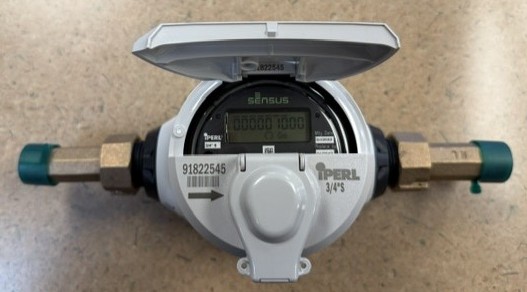
The City of Hastings uses iPerl water meters in homes and businesses. These meters have a gray body with a green or black base. A small tan device, called a meter transmitter, is connected to the meter by a wire and is typically mounted on a nearby pipe or wall.
Your water meter measures water use in gallons, including fractions of a gallon. However, your utility bill reports water usage in 1,000-gallon units. Because the meter is much more precise than your bill, the reading displayed on the meter will not exactly match the number shown on your utility bill.
For example, if your meter reads 0,002,456.92 gallons, your quarterly utility bill will show 2 units, representing 2,000 gallons of billed water use.
Reading your meter is simple. Lift the protective cover on the meter to reveal the digital display, which shows the current water meter reading.
How to Check for a Water Leak
Your water meter is one of the easiest tools for detecting hidden plumbing leaks.
Step 1
Turn off all faucets, appliances, irrigation systems, and any other water-using fixtures inside and outside your home.
Step 2
Check the water meter display. If the reading continues to increase, water is flowing somewhere in your plumbing system. Even small leaks can waste thousands of gallons of water each year and increase your utility bill.
Common Sources of Water Leaks
Toilets
Leaking toilets are one of the most common causes of high water bills. A worn or damaged flapper can allow water to continuously flow from the tank into the bowl without being noticeable.
A simple way to test for a toilet leak is to place a few drops of food coloring into the tank. Wait 10–15 minutes without flushing. If color appears in the bowl, the toilet has a leak that should be repaired.
Water Softeners
A malfunctioning water softener can also waste a significant amount of water.
Water should only discharge from the softener during its regeneration cycle. If water is continuously flowing through the drain line, the softener may need maintenance or repair.
Refer to your owner's manual for proper programming and maintenance recommendations.
Sign up to our News and Notices
Stay up to date on the city's activities, events, programs and operations by subscribing to our news, notices and publications.